Audio & Acoustics
What a product sounds like can define the whole experience. We combine acoustics, audio hardware, DSP, algorithms and tuning to make sure it sounds right, in the lab and in the real world.
How we work with Audio & Acoustics
The stages we move through on audio and acoustics programs, from first requirements to verified result.
1
Audio DSP Architecture
01.
Audio DSP Architecture
Hardware, software and DSP blocks designed to fulfil a product's requirements. System design is critical — DSP cannot compensate for bad hardware. Adequate memory and processing power must be ensured, especially when DSP runs parallel with general SW.
1
Develop from Scratch
01.
Develop from Scratch
Many audio DSP components are available commercially or as open source. Proven solutions can reduce development time and risk, but when none meet the project's needs, a custom algorithm may be required. Sigma Connectivity can support both approaches.
1
Algorithm Development
01.
Algorithm Development
Domain-specific research transformed into prototype code, iterated against prototype hardware. Hardware constraints like limited memory or processing power drive optimization needs.
MATLAB; Python; C/C++; SimuLink
1
Porting to a Hardware Platform
01.
Porting to a Hardware Platform
Port and optimize DSP algorithms for the selected embedded platform, using automated code generation or manual implementation.
ARM Hexagon; aDSP SHARC; Tensilica HiFi; XMOS
1
OS Support
01.
OS Support
Integrate audio devices and pipelines into the product's operating system, then validate the implementation against product requirements.
Android; Linux
We develop, test and optimize audio solutions for your product. Our audio and DSP team covers audio DSP algorithm development, acoustic hardware development, audio chipset integration, software development, measurement and testing, and develops new test methods as needed:
- Acoustic enclosure design: porting, damping and form factor
- Audio DSP algorithms: echo cancellation, noise reduction, beamforming and spatial audio
- Audio chipset integration and bring-up
- Software integration across DSP algorithms, device drivers and Android audio frameworks
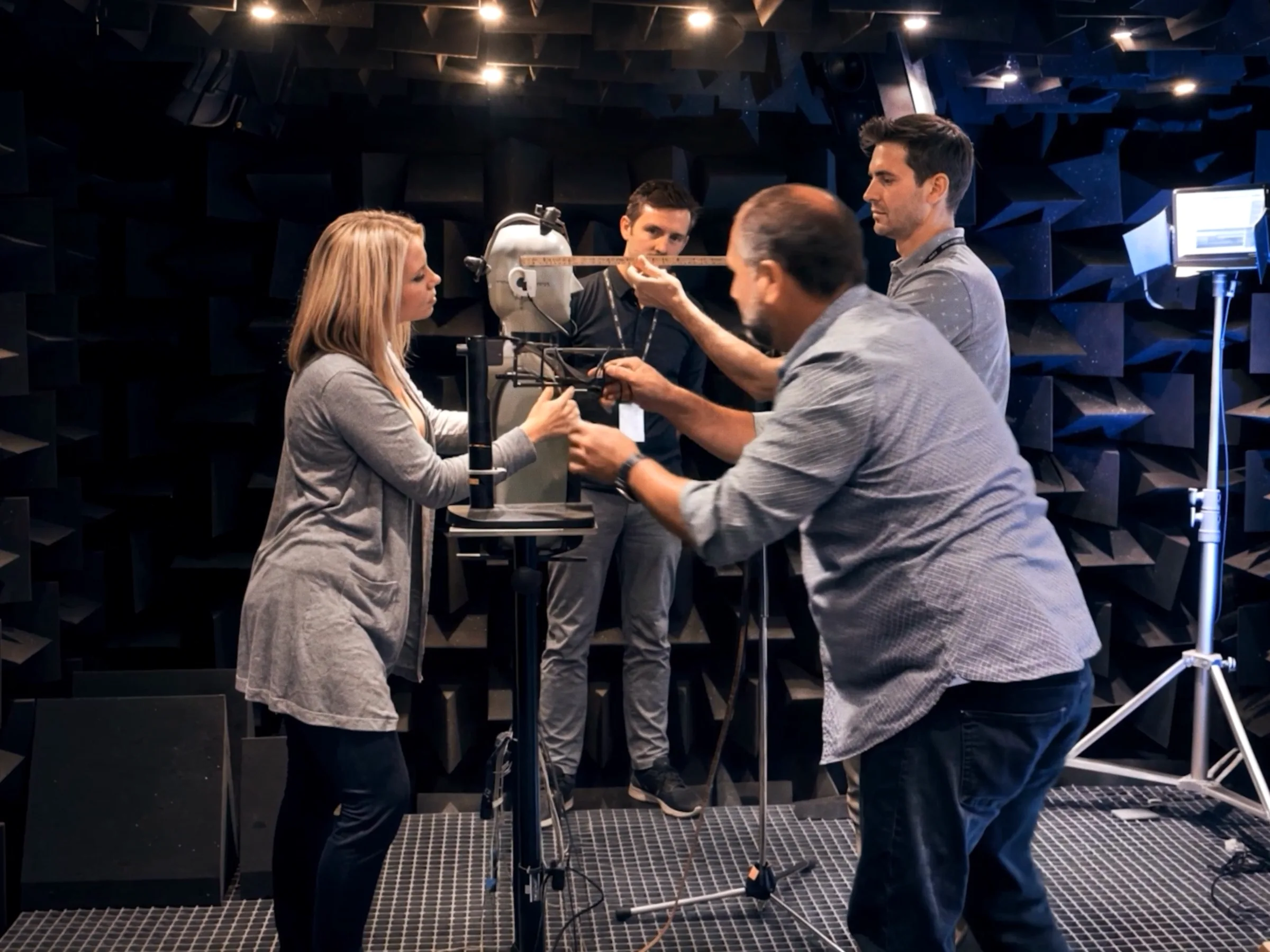
- Measurement and verification in our anechoic labs against ETSI, ITU and product-specific targets
Audio performance depends on the full signal path. Our software teams integrate DSP algorithms, device drivers and Android audio frameworks so the tuned result works in the finished product, not just on the lab bench.
Our senior team has shipped audio in mobile phones, conference systems, smart speakers, loudspeakers, headsets and industrial devices. The portfolio spans from piezo buzzers to hi-fi products.
Labs for Audio & Acoustics
Labs supporting this service
We use these labs to test, prototype and reduce risk in Audio & Acoustics projects.
Start your project
Let’s engineer something that matters
We’re ready when you are, let’s talk about your product.

Mattias Eriksson
Engineering Manager, Audio & Optoelectronics Design
Book a call

FAQ
Common questions about Audio & Acoustics
Can you integrate the audio solution into our existing embedded or Android platform?
Yes. Our audio and software teams integrate DSP algorithms, embedded device drivers and Android audio frameworks, including HAL integration, and verify the result in the finished product.
Can you develop a complete audio system?
Yes. Our expertise covers the complete audio chain, including system architecture, acoustics, microphones and loudspeakers, audio hardware, DSP and algorithms, embedded software, integration, tuning and verification. We can support specific parts of the system or take responsibility for the complete audio solution.
Do you work with both acoustics and audio electronics/software?
Yes. We combine acoustic, hardware and software engineering so that microphones, loudspeakers, mechanical design, audio electronics, DSP and embedded software can be optimized as one system rather than as isolated components.
What types of audio algorithms do you develop?
Our work includes audio DSP and algorithm development for applications such as echo cancellation, noise reduction, beamforming, filtering, equalization and spatial audio. Algorithms can be developed, adapted and integrated according to the requirements and constraints of the target product and platform.
Can you help with microphone and loudspeaker integration?
Yes. We support microphone and loudspeaker selection and integration together with acoustic design, enclosure design, porting, damping and tuning. This allows the transducer, mechanics, electronics and DSP to be optimized as a complete audio system.
Can you integrate audio onto our embedded platform?
Yes. We support audio chipset and codec integration, audio interfaces, DSP implementation, drivers, processing pipelines and embedded software integration. We can also optimize audio processing for the memory, processing-power and power-consumption constraints of the target platform.
What can you measure in your audio and acoustic labs?
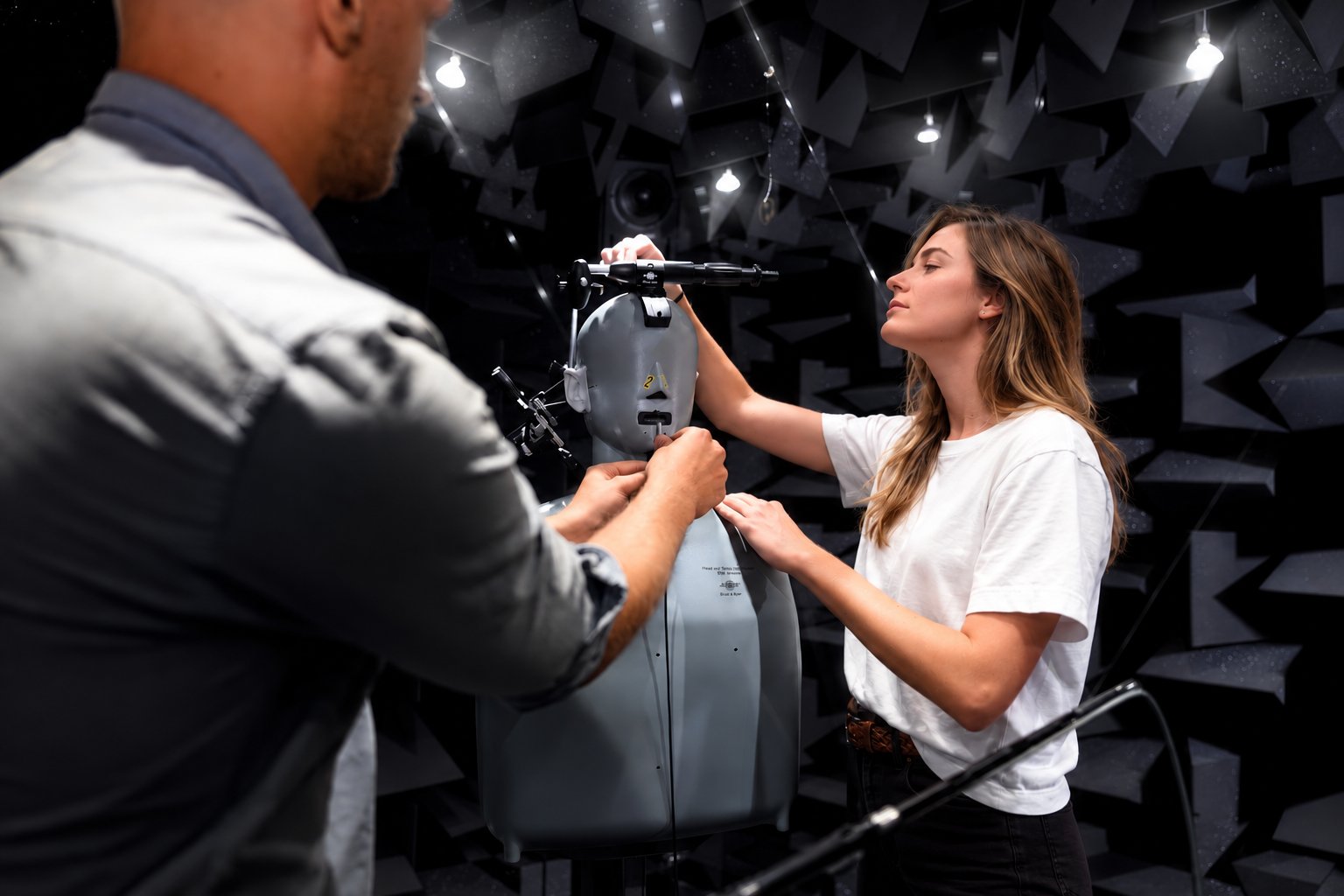
Our labs support acoustic and electrical audio measurements, tuning, benchmarking and verification. Facilities include anechoic and reverberant rooms, Head and Torso Simulators, audio analyzers and dedicated test systems for evaluating microphones, loudspeakers, speech, audio processing and complete products.
Can you verify products against audio and telecommunications standards?
Yes. Our facilities and measurement systems support verification against relevant industry standards and product-specific requirements, including ETSI and ITU methods where applicable. We also develop dedicated test methods when standard approaches do not fully address the product or use case.
Can you benchmark our product against competing products?
Yes. We perform objective measurements and comparative benchmarking of audio and acoustic performance. The results can be used to identify performance gaps, define targets and guide hardware, acoustic and DSP optimization.
Mattias Eriksson
Engineering Manager, Audio & Optoelectronics Design